







May 2026 Policy Memorandum - FAQs You Need to Know
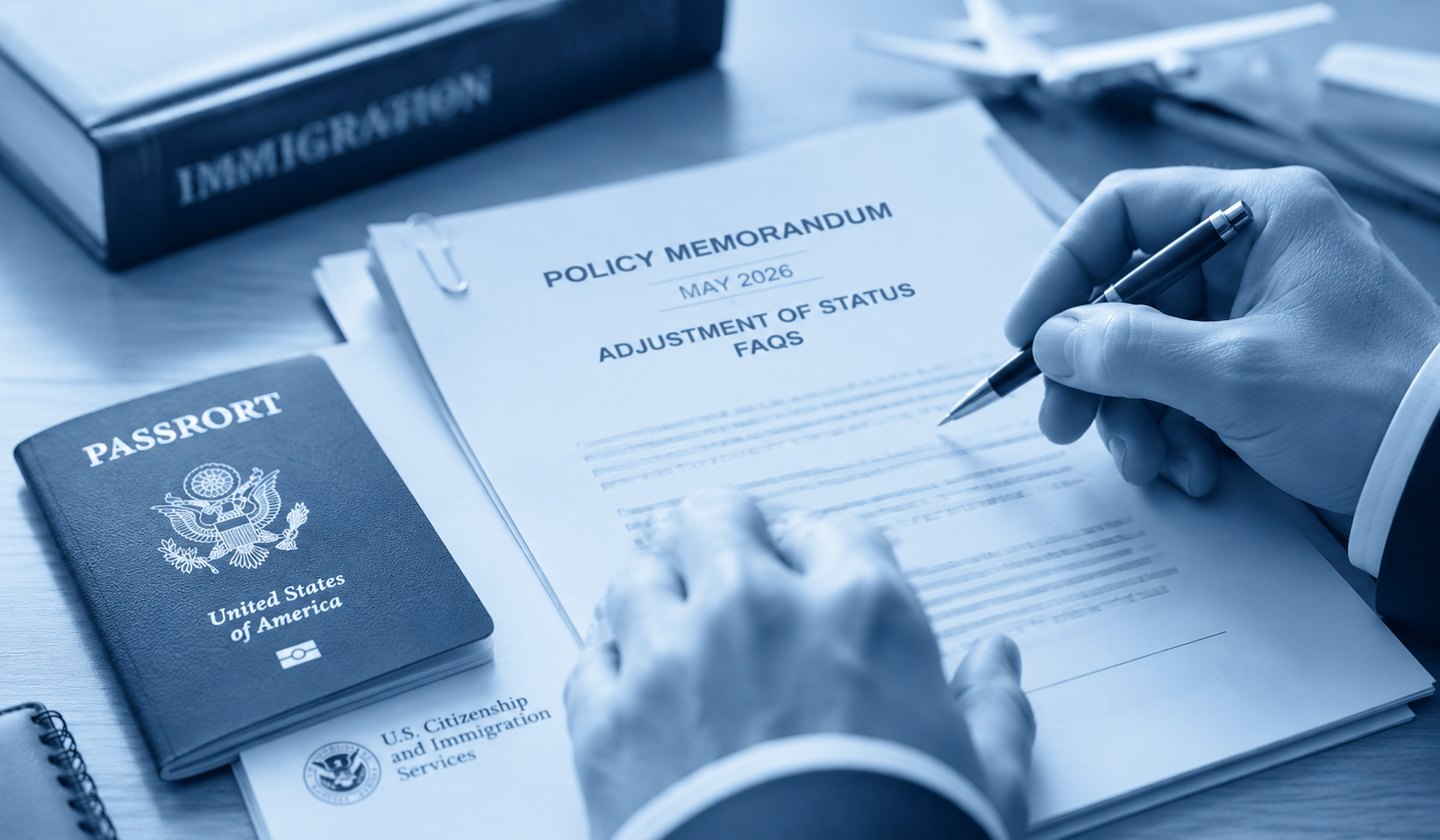
In May, USCIS published a Policy Memorandum that sought to limit the circumstances in which it will grant a foreign national ability to adjust their status to that of a lawful permanent resident within the US.
Here is the link to the Memorandum: https://www.uscis.gov/newsroom/news-releases/us-citizenship-and-immigration-services-will-grant-adjustment-of-status-only-in-extraordinary
It will take some time to see the extent and impacts of the Memorandum. But USCIS has since walked back the Memorandum, and reconfirmed that adjustment of status is still available to most applicants. There are several questions we can answer now:
Q: Does the Memorandum prohibit adjustment of status?
A: No, the Memorandum does not prohibit adjustment of status or create a ban on adjustment of status. It reframes how USCIS views AOS as an “extraordinary relief”, in comparison to the “ordinary process”, rather than as AOS and consular processing being viewed as two equal paths to permanent residence. And USCIS has since confirmed that AOS is available to most applicants.
Q: How does the Memorandum change the adjustment of status process?
A: The Memorandum initially directed USCIS officers to treat an applicant’s decision to seek AOS in the US rather than depart and consular process as an "adverse factor" that must be overcome by the circumstances of that case. Since then, USCIS has confirmed that AOS is still available in most cases, and we generally advise preparing positive factors that demonstrate you are entitled to AOS. Those factors could include:
• Evidence of deep U.S. family ties (U.S. citizen or LPR spouse/children), particularly where separation would cause hardship
• Long-term lawful presence and community integration (employment history, tax records, civic involvement, community letters)
• Evidence of good moral character (no criminal history, charitable contributions, professional accomplishments)
• Demonstrated benefit to the United States (employer sponsorship letters, economic contributions)
Q: How does this impact clients with currently-pending AOS cases?
A: In the near term, we might see more requests for evidence from USCIS and notices of intent to deny if USCIS finds that the applicant does not present sufficient positive factors. We will assist with those and fight for each individual case. We also expect legal challenges and other initiatives challenging the Memorandum.
Q: What about clients whose priority date is not yet current?
A: If your priority date is not current, nothing has changed for you at this point in time. You do not need to return to your home country, so long as you remain in lawful status. Based on your priority date, you can't file the I-485 yet. And the AOS interview will come much later than that. Once your priority date becomes current, we will analyze the circumstances at that point, and then help you make the best case for moving forward with AOS.
Q: What should our clients that plan to adjust status in the US do at this time?
A: We encourage you to comply with conditions of your non-immigrant status while in the US, and to work on positive factors that we listed above. And please contact us via your BDV account if you have any further questions or concerns.
As developments arise with this memorandum, we will keep you updated as to what you can expect as you move through the immigration process.
We understand that this can be confusing and worrying at this time. We assure you that our team has knowledge, experience, and resources to guide you through this process with the best possible outcome!
If you have any additional questions, please reach out through the BDV chat. Our team is here to support you.
Leave a Reply